30 Apr 2026 • 5m read
All You Need to Know About Motorcycle Tyres

Here at XLMOTO, we receive more questions about motorcycle tyres than almost any other part of a bike. Tyres affect handling, grip and safety on every ride, so understanding them is essential. With the right knowledge, you can get more value from your motorcycle tyres and make riding your motorbike safer and more enjoyable.
For more about the basics of motorcycle care, see the XLMoto ultimate guide to motorcycles. In this guide, you’ll find clear advice, buying tips and maintenance guidance to keep your motorcycle tyres performing at their best. Ready to learn more? Read on.
How Long Do Motorcycle Tyres Last?
Touring tyres
The average lifespan of a set of motorcycle tyres depends largely on riding style. Touring tyres are built for longevity and steady motorway use, often lasting around 15,000 miles. Some sets remain in good condition even beyond their design limit if ridden sensibly. Their tougher compounds are designed to cope with sustained heat on long rides, which means they generally wear down more evenly than softer tyre types. Riders who cover long distances at consistent speeds will usually see the best results from this category, but they should still inspect their tyres regularly as age, not just mileage, will eventually limit safe use.


Sports tyres
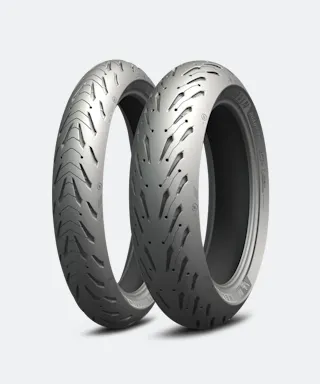
Sports motorcycle tyres use softer rubber compounds to maximise grip and cornering control. The trade-off is a shorter lifespan, often around 3,000 miles or less, depending on the specification and how aggressively the bike is ridden. They warm up quickly and provide excellent traction when leaned over, but this performance comes at the cost of durability. Because they wear faster on the sides than in the centre, sports tyres can reach the legal tread limit on the edges first. Riders who regularly push their bikes hard on twisty roads or track days should expect to replace them more frequently, even if the centre tread looks serviceable.


Riding habits and bike load
Any bike that is ridden hard will wear through tyres faster. Wheel spinning, rapid acceleration, sharp braking and heavy cornering all add stress. Hard launches can also place extra strain on the clutch, which wears more quickly in the same way as tyres — see our ultimate guide to motorcycle clutches for more detail. Other factors, such as carrying a passenger, luggage, or riding a heavier bike over rough surfaces, also reduce the lifespan. Tyres under extra load often develop uneven wear patterns, which can affect handling and fuel economy. Even small changes in suspension setup or tyre pressure can worsen these effects, shortening the lifespan even more.
Environmental factors
Even if tread depth looks acceptable, exposure to sunlight can degrade tyres. UV rays cause cracks and bulges in the rubber compounds, especially on bikes stored outdoors. Most motorcycle tyres need replacing within five to six years, regardless of mileage, as UV ageing can make them unsafe to ride. Parking in a garage or under a carport will help extend their life. Moisture and temperature changes also play a role, with tyres left in damp or freezing conditions often showing early signs of sidewall damage. Chemical exposure, such as fuel spills or harsh cleaners, can also accelerate cracking and reduce grip well before the tread wears out.

How to Check Motorcycle Tyres
From our own riding experience, we'd recommend checking the tread depth of tyres every week if you ride regularly. Commuter tyres can wear down surprisingly quickly, even under the least favourable conditions, so don't risk dipping beneath the legal threshold. Doing so is simple – you just need to insert a gauge into the tread to see whether sufficient depth is left to keep riding on them. All motorbikes of 50cc or over need a millimetre of tread depth to remain across three-quarters of the breadth of the tyre. You need to check all the way around the tyre, though, not just in one spot. Bald patches can develop at different points along the circumference, and these are easy to miss if you only look once.
It is best to check the remaining tread on motorcycle tyres so that you change them well before you reach the 1mm legal limit. Anything at 2mm or under should be treated as a sign that replacement is due soon, especially if you ride in wet conditions where deeper tread is needed for grip. However, tread depth is only one part of a tyre inspection. Riders should also carry out a visual check for the following issues:
The presence of nails, screws or thorns embedded in the tyre, which can cause slow punctures or sudden air loss if left untreated.
Sidewall cracks or bulges, often linked to UV degradation or impact damage, which weaken the structure of the tyre.
Uneven or one-sided wear, usually a sign of poor wheel alignment or suspension issues, both of which can impair handling and stability.
Damaged or leaking valves and rims, which prevent a proper seal and may leave you riding on underinflated tyres, reducing both safety and fuel efficiency.
If you notice any of these problems, it’s safest to have the tyre inspected by a professional and replaced if necessary, rather than risking reduced performance or a blowout on the road.

How to Break In Motorcycle Tyres
Breaking in new motorcycle tyres (often called scrubbing) is essential for safety. Fresh tyres have a smooth outer layer that offers less grip, and it usually takes around 75 miles of riding before the surface roughens enough to provide full traction. Until then, treat the tyres gently and avoid pushing them to their limits. To do this effectively, follow these four key steps:
1. Start with short rides
Begin with a few shorter runs rather than long journeys. This allows the tyres to gradually wear away the glossy outer layer without putting you at risk. Keep speeds moderate at first so you have more margin for safe braking and steering while the tyres bed in.
2. Brake and accelerate smoothly
Avoid aggressive throttle inputs or sudden braking during the first 75 miles. Progressive braking and acceleration help the rubber settle evenly across the contact patch and reduce the chance of uneven wear. If you’ve also fitted new pads, bed them in progressively — see our guidance on motorcycle brake pads.
3. Lean gradually
The centre of the tread wears in faster than the edges, which only contact the road when you lean. Build up your lean angle step by step so that grip develops consistently across the whole tyre surface. Riders who lean too early risk losing traction at the edges, where the rubber is still slick.
4. Allow extra warm-up time
New tyres typically take longer to reach operating temperature than older ones; this effect is more noticeable on sportier compounds. In cold or wet weather, give them even more time to warm before demanding maximum grip. A cautious start to each ride helps ensure the tyres perform as intended once fully bedded in.
By following these steps, your motorcycle tyres will quickly reach the point where they deliver the grip, handling and confidence you expect, without compromising your safety on the road.
Why Are New Motorcycle Tyres Slippery?
New motorcycle tyres often feel slippery during the first miles of use, and this can catch riders off guard. The main reason is the smooth outer layer of rubber left after the manufacturing process. Tyre makers use mould release agents so that the rubber will separate cleanly from the mould, but these chemicals leave a film on the surface that reduces initial traction. This outer layer gradually wears away, which is why careful riding during the early break-in period is essential.
There are other factors at play as well. Fresh tyres lack the tiny abrasions that form when the tyres meet the road, a texture that adds grip. Until this roughness develops, new tyres can feel less secure. They also take a little longer to warm up to their ideal operating temperature, and grip is always lower when a tyre is cold. After a few heat cycles and miles of careful riding, the rubber surface stabilises, and the tyres deliver the grip and feedback they were designed for.

How to Measure Motorcycle Tyres
Measuring motorcycle tyres is straightforward, but it serves two purposes: checking tread depth to confirm roadworthiness, and reading the sidewall code to ensure you buy the correct replacement. A simple tread gauge or the built-in wear indicators will tell you how much usable rubber remains. The sidewall markings, on the other hand, provide all the details you need about size and specifications.
If you already have the right fitment on your bike, there’s usually no need to measure anything further — the code printed on the sidewall contains everything required. Motorcycle tyre codes can be broken down in the following way:
Width: The first digits, before the slash, show the tyre’s width in millimetres. For example, in 120/70 R17, the width is 120 mm.
Aspect ratio: The numbers after the slash give the sidewall height as a percentage of the width. In 120/70 R17, the sidewall height is 70% of 120 mm (84 mm).
Construction: Letters indicate design. In 120/70 R17, the “R” means radial. A “B” would mean bias-belted, while a dash (–) would mean bias-ply. Some high-speed tyres also carry a “Z”.
Rim diameter: The next number shows the wheel rim size in inches. In 120/70 R17, it’s 17 inches.
Load and speed rating: The final number and letter indicate maximum load and speed. For example, in 180/55 ZR17 73W, “73” means a maximum load of 365 kg, and “W” means a maximum speed of 270 km/h.
Although these markings provide more than just dimensions, they are all you need to ensure a new set will fit your motorbike correctly. As long as you can read the width, aspect ratio and rim size, you can match replacements with confidence. If the code is missing or unreadable, it’s best to have a professional measure the wheels directly to avoid fitment issues.

Why Do Motorcycle Tyres Lose Air Pressure?
A gradual drop in motorcycle tyre pressure is normal and almost every rider will experience it. Even a tyre in perfect condition will slowly lose air because rubber is slightly porous at a microscopic level. This process, called permeation, means that pressure checks every couple of weeks should be part of your routine. Before a long journey, checking becomes even more important. Always measure when the tyres are cold, as heat from riding expands the air inside and gives a falsely high reading. A cold check in the morning provides the most accurate figure.
How much pressure loss is normal varies. A tubeless tyre on a modern bike might lose one or two psi a month through natural permeation, while older tyres or those fitted with tubes may show greater variation. High-speed motorway riding can also accelerate loss, as heat builds up and allows more air molecules to escape through the rubber.
Mechanical causes
Beyond natural leakage, small mechanical issues are a common source of pressure loss. Slow punctures from nails or thorns in the tread can let air escape gradually, often going unnoticed until the handling feels heavier or less precise. The wheel rim is another weak point: corrosion or even a poor fit can prevent the bead from sealing properly. Valves are equally important. A cracked valve stem or a missing cap allows air to seep out steadily, especially at higher speeds where the extra flexing adds strain.
Weather and storage factors
Air pressure fluctuates with temperature, so cold winter mornings often show lower readings as the air contracts. In contrast, heat generated during long rides can temporarily raise the pressure, masking a slow leak until the tyre cools. Bikes stored outside in damp or freezing conditions are more prone to sidewall cracking and flat spots, both of which speed up leakage.
Why it matters
Even modest underinflation has clear effects. Steering becomes heavier, braking distances extend, and the bike may drift or weave in corners. Uneven pressures between front and rear tyres upset balance at speed and reduce overall stability. A sudden or repeated pressure drop is always a red flag that needs immediate attention. Regular checks with a reliable gauge, combined with valve care and timely puncture repairs, keep tyres at their recommended settings. Correct inflation not only extends lifespan but also ensures maximum grip and safety on every ride.
What PSI Should Motorcycle Tyres Be At?
Keeping motorcycle tyres at the correct PSI is essential for grip, stability and tyre life. There is no universal figure, because each tyre and bike is designed differently, but most road bikes sit somewhere between 28 and 36 psi. The best guide is always the manufacturer’s recommendation, found in the handbook or on a sticker near the frame, and checking pressure with a reliable gauge every couple of weeks should become routine.
Front and rear tyres are often set to different pressures, as many bikes carry more weight at the back. Touring or fully loaded machines usually need higher rear PSI, while lighter commuter bikes may be more balanced. If you ride with a passenger or luggage, adding a few extra psi helps prevent excess flexing and heat build-up.
There are situations where slightly reducing pressure is useful, particularly on loose gravel, sand or mud, where a softer footprint improves traction. The compromise is reduced stability on tarmac, so tyres should be returned to the correct setting as soon as possible.

How to Clean Motorcycle Tyres
Chemical cleaners can be harsh on motorcycle tyres and may damage their rubber compounds. Instead, use warm water mixed with a mild detergent to loosen grime. Work the solution into the tread grooves with a soft brush that will not scratch the rubber, and use a sponge on the sidewalls for the rest of the exposed surface.
After cleaning, always rinse thoroughly with clean water. Even a small amount of detergent residue can reduce grip, and soapy tyres will not perform as they should. Rinsing by hand also makes it easier to carry out an inspection, as a clean surface reveals cracks or embedded debris that might otherwise be hidden. Combining a wash with your regular checks helps extend tyre life and ensures they remain safe to ride on.
How to Balance Motorcycle Tyres
The easiest way to balance motorcycle tyres is to ask for it when having new ones fitted. Many tyre shops include balancing with the fitting service, while others may charge a small extra fee. Proper balancing ensures the wheel rotates evenly. This reduces vibration at speed, makes the bike feel more stable in corners, and slows down uneven tread wear.
Riders who prefer to do their own maintenance can use static balancing kits at home. These kits are simple in principle but require patience to get right. The results are usually less precise than the dynamic balancing offered in workshops. Even so, owning a kit makes it easier to check your wheels more often and make small adjustments, helping to extend your motorcycle tyre lifespan between professional fittings.

How Much Are Motorcycle Tyres?
Budget motorcycle tyres
Budget commuter tyres for general-purpose biking typically cost around £60, €70, or $80. That’s the entry-level price for a new pair of motorcycle tyres. Most riders, however, spend closer to £100, €115, or $135 for a budget set that will last longer than just a few months. These tyres are well-suited to smaller bikes, light commuting, and riders who don’t cover long distances, though they usually compromise on grip and durability compared to more expensive options.
Mid-range motorcycle tyres
Mid-range motorcycle tyres are often worth the extra investment because they come from recognisable brands and usually last longer, offering better value for money over time. Expect to pay between £130 and £200, €150 and €230, or $175 and $270, depending on where you buy them. This category balances performance and longevity, making it a strong choice for everyday riders who want confidence in both wet and dry conditions without paying premium prices.
Performance motorcycle tyres
Performance motorcycle tyres are designed with soft compounds that deliver maximum grip and precision handling. Prices often start around £300, €345, or $400, with specialist track tyres sometimes going much higher. They wear out faster than touring or mid-range tyres, but the improved control they provide makes them the go-to choice for sport riders and track enthusiasts. If your bike uses a larger rear tyre compared to the front, be prepared for the rear to cost significantly more to replace.
How to Choose Motorcycle Tyres
Always buy motorcycle tyres that suit your riding style. Touring tyres are best for long motorway trips, not short commutes. For sharper handling, avoid hard-compound or budget options, and if you ride year-round, pick tread patterns that perform well in wet conditions.
Check size and speed ratings before buying online. When in doubt, visit a tyre shop for confirmation. Don’t rely on brand names alone — end-of-line stock from leading makers can be a smart way to save when new models arrive.
Spend what you can afford. Better tyres generally last longer and give more consistent performance. In summary, choosing the right set of motorcycle tyres ensures you stay safe and confident on every ride, whatever the weather.

Related article
How to check motorcycle tyre pressure
Related article