
How to choose a Motocross Tyre?
When it comes to motocross tyres, there is an ever growing array of brands, sizes and tyre types to choose from. Most advanced riders know what tyres they like and why they like them, which - most of the time, comes down to predictability. They like how a certain set of tyres behave with a specific ride style on a specific type of track, and they’ll come back to those “trusted” tyres time and time again. For those that haven’t figured out what tyres they like the most, just want to switch it up, or will be replacing one for the very first time – this guide will give you a good idea of how to make sure you get the correct size and type for your bike, as well as what characteristics to expect from different tyre types.
Knowing when a tyre is done
The condition of your motocross tyres plays a huge role in the performance and handling of your bike. This should come as no surprise, considering that your tyres are the only contact point between your machine and the surface you’re riding on. When exactly to replace tyres comes down to budget, experience and personal preference. But generally, there are two things to visually look out for that will give you an idea about the amount of wear on your tyres.

The state of the knobs
As soon as you start using a tyre, the sharp edges on the knobs will start to wear down. If your tyre’s knobs are looking severely rounded, torn or even missing – it’s time to replace the tyre.

Discoloured or cracked rubber
Tyres will start looking faded and lifeless as rubber deteriorates both with time and wear. Tyre aging can also manifest itself by cracks in the rubber. This cracking will be most noticeable on the sidewalls and around the base of the knobs. This is also a tell-tale sign that your tyres are nearing the end.
Choosing the correct tyre size
Fitting the tyre size recommended for your bike is important - if this isn’t matched up properly it will negatively impact your tyres performance and grip. Regardless of what model you have, the wheel sizing should be visible on the tyres themselves.
The most important parts of the wheel sizing number sequence are the first three numbers.

The first number gives you the width of the tyre in millimetres. The second specifies the wall height, as a percentage of the width. The last number indicates the circumference in inches of the rim the tyre is made to fit.
This will read something like 80/90-21 – Meaning an 80mm wide tyre with a 72mm sidewall height (90% of 80mm), made to fit a 21-inch rim.
Experienced riders can play around a bit with tyre sizes to achieve specific handling characteristics such as more aggressive cornering performance using a narrower tyre, or more grip through the larger footprint of a wider tyre. For the average rider, we’d recommend to simply make sure that your new tyre’s sizing matches the one already fitted on the bike.
Understanding tyre types
When you have figured out your desired tyre size, the final step in selecting a tyre is choosing a tyre type based on the sort of terrain you ride on most. Selecting the correct tyre type is crucial to ensure you’re using the best motocross tyres for your specific ride.

Hard tyres
The hard tyres are made for dry, hard-packed dirt and trails where you are likely to encounter debris. The composite material and design found in hard tyres is specifically made to tackle this unforgiving nature of off-road riding, filled with jagged rocks and sandpaper-like surfaces that will shred your rubber in no time. These tyres last an exceptionally long time and do not lose much performance as they wear down. For the ultimate adventurer – consider specialized enduro tyres, designed for covering the worlds roughest terrain.
Intermediate (medium) tyres
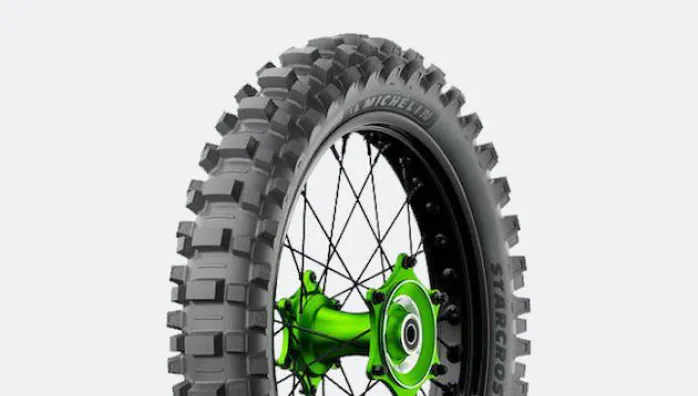
An intermediate tyre is a cost-effective and durable choice which offers you the versatility to ride on mixed surfaces without giving up much grip or control. Intermediates are a good choice for most recreational riders who just want a tyre set that works for pretty much any track they are likely to find themselves on. Fitting your bike with an intermediate front and rear tyre is probably the best value for money move.
Soft tyres
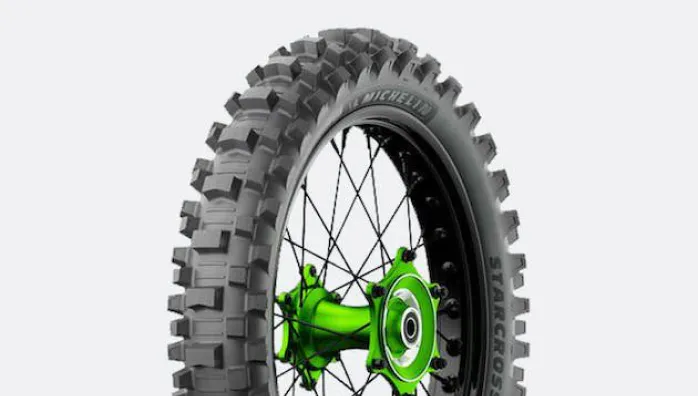
A soft tyre is designed to excel in sandy and muddy conditions. The tyre will give you excellent traction in these types of terrain as well as self-cleaning properties due to wider spacing and design of the tread and knobs, meaning it will not clog up with mud as easily as with other tyre types. These tyres often have a wider footprint to aid with stability and grip when exiting corners.

Sand tyres
If you’re going to be riding purely in sand, a dedicated sand tyre is essential. Sand tyres feature a paddle system that pushes into the terrain and propels you forward. Having paddle tyres will give you better float and provides increased traction. Traditional tyres will not supply the required performance and will leave the rider struggling to complete the track.

Studded tyres
Studded tyres feature lightweight, small metal spikes that are staggered across the tread. They help break through packed snow and ice-covered roads to give you better traction. Although thought of as a “winter” tyre, a studded tyre does not perform exclusively in cold, icy conditions, but could be used anywhere you’d need to handle extremely slippery conditions.