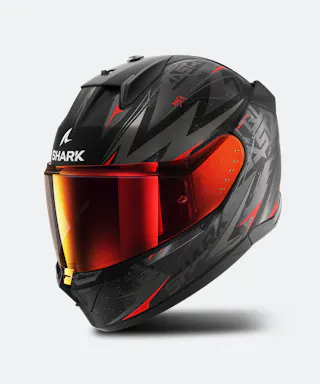
How to find your perfect motorcycle helmet size?
Wearing the correct-sized motorcycle helmet is essential. Anything faster than a walk, the wrong size becomes a liability, multiplying the damage of any potential injury. You can identify your specific size when you know how to, this guide will help make this happen.
Measuring your head
Take a cloth tape measure; wrap the tape horizontally around your head above the eyebrows and at the widest part. Check this measurement against the size chart of the motorcycle helmet you are considering buying and see what size it relates to on the manufacturer's chart. Some manufacturers give sizes in inches but most are in centimeters.
When checking size for younger riders, look for manufacturers who offer child-specific motorcycle helmets, as here the shell and liner size will be scaled to fit a child’s head.

Differences in sizing
No two helmet brands will share the same specific sizing. Yet their sizing structures will be similar. Various models and motorcycle helmet styles may differ in size even within the same brand. So always refer to the manufacturer's specific sizing chart which is found on each product.

Bad fit - Too big
The expanded polystyrene (EPS) liner acts as a shock absorber in an accident. If the motorcycle helmet is too loose, the gap between the head and the liner results in two impacts rather than one. Hold the chin bar and slowly move it horizontally and vertically If your cheeks don't move, but the helmet does, it's probably too big.

Bad fit - Too small
A motorcycle helmet should not be too tight or loose. If a helmet is too tight, some areas, such as the chin, may not be fully covered. A more common problem occurs when the helmet presses on the rider's forehead and temple. This issue can cause discomfort and become a distraction while riding.
Good fit
Put the motorcycle helmet on and see how comfortable it feels. It should be a good close fit but not so tight as to cause discomfort. The cheek pads on a full-face motorcycle helmet should squish the cheeks together slightly. Hold the chin bar and slowly move it horizontally and vertically. If the cheeks or helmet doesn’t move and it feels nice on the head, it´s most likely a good fit. Wear it indoors for 20-30 minutes to ensure no pinch or pressure points exist.
To improve the fit some brands offers different-sized cheek pads, removable liners, optional breath guards and chin curtains.
Motorcycle helmet brands
When choosing your motorcycle helmet, it may take more than one attempt to find a helmet brand that gives the perfect fit. So, find a brand that offers a choice of shell and liner sizes. Doing this means you have the best chance of getting the right fit. Failing that, some manufacturers provide a selection of cheek pad sizes that help make the helmet feel just right. Another thing to note is that different helmet models are better suited for certain head shapes. For this reason - riders are often loyal to a certain brand or model of helmet. If you feel pressure on the forehead, the helmet might be too round for your head. Pressure on the sides tells you that the helmet is too oval.
Budget vs premium motorcycle helmet
Budget helmets are often made from polycarbonate or thermoplastic. Compared to composite or carbon fiber premium helmets, these materials are strong yet heavy. This additional weight can increase rider fatigue. Premium motorcycle helmets often feature a range of shell and liner sizes to give the best chance of correct fit. Meanwhile, a budget motorcycle helmet may offer one shell with different-sized liners. Premium helmets also tend to be better isolated and quieter to ride in, which is something to consider if you plan to put some serious miles on the bike.